- August 17, 2026
Hiring a freelancer to redesign your website? Paying an independent contractor to repair equipment? Working with a consultant who isn’t on your payroll? Those payments may be considered nonemployee compensation for tax reporting purposes.
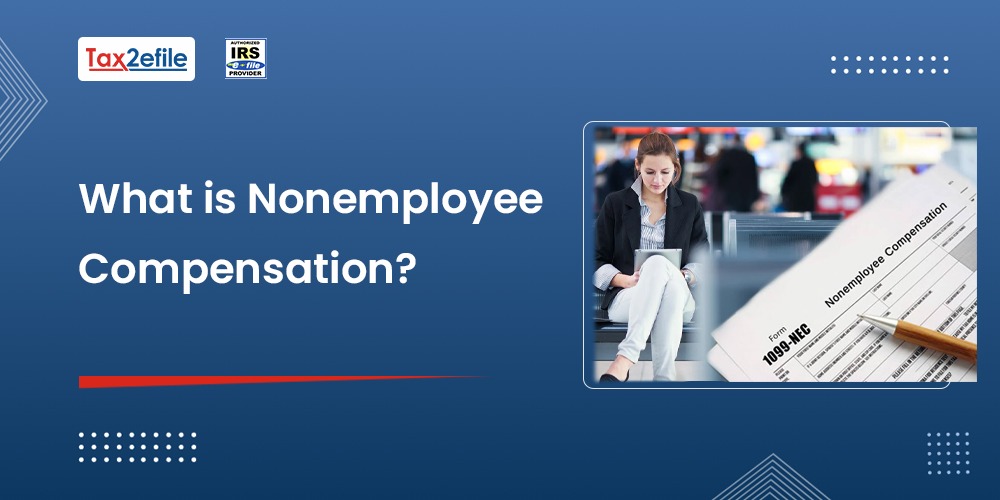
Nonemployee compensation, often shortened to NEC, generally refers to payments a business makes to someone who performs services but is not treated as an employee. When those payments meet IRS reporting requirements, the business usually reports them on Form 1099-NEC, Nonemployee Compensation.
For payments made during 2026, an important rule has changed: the general reporting threshold increased from $600 to $2,000.
Understanding what counts as nonemployee compensation can help businesses determine when Form 1099-NEC is required and help contractors understand why they received one.
Table of Contents
What Does Nonemployee Compensation Mean?
In simple terms, nonemployee compensation is money paid for services performed by someone who is not your employee.
The person providing the service may be an independent contractor, freelancer, consultant, subcontractor, or another service provider.
For example, imagine a small business hires a freelance graphic designer to create a new company logo and marketing materials. The designer is not added to payroll, controls how the work is completed, and invoices the business for the project.
If the business pays the designer $3,500 during 2026, that payment will generally fall under the Form 1099-NEC reporting rules because it was paid for business services to a nonemployee and exceeds the 2026 reporting threshold.
The IRS generally considers a payment nonemployee compensation when it meets four conditions:
- The payment was made to someone who is not your employee.
- The payment was for services connected with your trade or business.
- The payment was made to an individual, partnership, estate, or certain other reportable payees.
- Total reportable payments to that payee reached the applicable reporting threshold during the year.
The IRS uses these conditions when determining whether payments should generally be reported as NEC.
What Payments are Considered Nonemployee Compensation?
Nonemployee compensation can cover many common business arrangements.
It may include fees paid to independent contractors, commissions for services, payments to subcontractors, professional service fees, and certain prizes or awards connected with services performed as a nonemployee.
Consider a construction company that hires an independent electrician for several projects throughout the year. The electrician is not an employee of the construction company and submits invoices for completed work. If qualifying payments total $8,000 during 2026, the company would generally report that compensation on Form 1099-NEC.
Another example could be a marketing agency paying a freelance copywriter $2,400 for client projects during the year. Because the writer performed services for the agency as a nonemployee and the payments reached the 2026 threshold, Form 1099-NEC would generally be required.
The IRS also states that qualifying payments for services can include related parts and materials in determining reportable nonemployee compensation.
What is the Nonemployee Compensation Threshold for 2026?
This is one of the biggest Form 1099-NEC changes businesses need to know for 2026.
For payments made before 2026, the general reporting threshold was $600.
For qualifying payments made during 2026, the threshold is $2,000. The IRS states that the threshold will be adjusted for inflation for calendar years after 2026.
Here’s a simple example.
Suppose your business hires two freelance photographers during 2026.
You pay Photographer A $1,500 and Photographer B $3,200 for business photography services.
Assuming the other Form 1099-NEC requirements are met, you generally would not be required to issue Photographer A a Form 1099-NEC based solely on the $1,500 payment because it is below the 2026 threshold.
Photographer B’s $3,200 payment, however, generally meets the reporting threshold.
Keep in mind that the reporting threshold determines whether the payer has to file an information return. It does not automatically determine whether income is taxable to the person who received it.
There is also an important exception involving backup withholding. Form 1099-NEC may still be required when federal income tax was withheld under the backup withholding rules, regardless of the amount paid.
Nonemployee Compensation vs. Employee Compensation
The difference between an employee and a nonemployee matters because the tax reporting is different.
| Employee | Nonemployee |
|---|---|
| Usually receives Form W-2 | Usually receives Form 1099-NEC when reporting requirements are met |
| Employer generally withholds applicable payroll taxes | Payer generally does not withhold payroll taxes |
| Works as an employee of the business | Provides services as an independent contractor or other nonemployee |
| Wages are reported through payroll | Qualifying service payments are reported as nonemployee compensation (NEC) |
Calling someone an independent contractor does not by itself make that person a nonemployee for federal tax purposes. The actual working relationship matters.
Businesses should properly determine worker classification rather than choosing between a W-2 and 1099 simply based on convenience.
Nonemployee Compensation vs. Form 1099-MISC
Form 1099-NEC and Form 1099-MISC are sometimes confused because nonemployee compensation was historically reported on Form 1099-MISC before Form 1099-NEC returned as a separate form.
Today, the forms serve different purposes.
Form 1099-NEC is primarily used to report qualifying compensation for services performed by nonemployees.
Form 1099-MISC is used for several other types of reportable payments, such as qualifying rents, royalties, certain prizes and awards not reported as service compensation, medical and health care payments, crop insurance proceeds, and other specified payments.
For example, paying an independent contractor for website development may result in Form 1099-NEC. Paying rent for business office space may instead fall under Form 1099-MISC reporting rules.
Choosing the correct form matters because the IRS uses the information reported to match income with the recipient’s tax records.
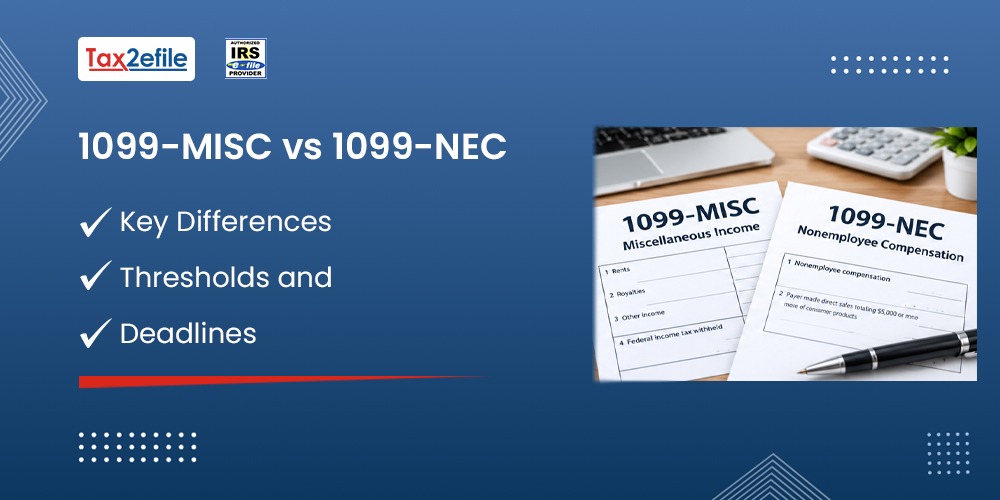
Learn more about Form 1099-MISC vs 1099-NEC
Where is Nonemployee Compensation Reported on Form 1099-NEC?
For 2026, the revised Form 1099-NEC reports nonemployee compensation in Box 1a.
The IRS instructions state that this box can include fees, commissions, prizes and awards for services, and other compensation paid for services performed by someone who is not an employee.
This is a change worth noting if you are familiar with earlier versions of Form 1099-NEC, where the main NEC amount appeared in Box 1.
Businesses should always use the form and instructions applicable to the calendar year being reported.
Get Form W-9 Before Paying an Independent Contractor
One simple step can prevent several problems when it is time to prepare Form 1099-NEC: collect Form W-9, Request for Taxpayer Identification Number and Certification, from the contractor before or when the business relationship begins.
Form W-9 gives you important information such as the payee’s legal name, business name when applicable, federal tax classification, address, and taxpayer identification number.
The IRS recommends obtaining Form W-9 when you determine that the person you are paying is an independent contractor.
Waiting until January to request a contractor’s tax information can create unnecessary filing delays.
When is Form 1099-NEC Due?
Form 1099-NEC generally has an earlier filing deadline than many other Form 1099 information returns.
The form must generally be:
Filed with the IRS by January 31, and
Furnished to the recipient by January 31.
The same January 31 IRS deadline applies whether Form 1099-NEC is filed electronically or on paper.
When January 31 falls on a Saturday, Sunday, or applicable legal holiday, the deadline moves to the next business day.
Learn more about the Form 1099-NEC Due Dates
Do You Need to E-File Form 1099-NEC?
Many businesses are now required to file information returns electronically.
Under current IRS electronic filing rules, businesses generally must e-file when they are required to file 10 or more information returns in aggregate, rather than applying the threshold separately to each type of form.
Even businesses below the mandatory e-file threshold can choose electronic filing.
Tax2efile offers you a smooth and hassle-free Nonemployee compensation filing flow that assists you in submitting your IRS tax forms without any errors.
What Should You Do If You Receive Form 1099-NEC?
Receiving Form 1099-NEC means a payer reported nonemployee compensation or another applicable amount to you and the IRS.
If you are an independent contractor or sole proprietor and the payment represents income from your business, the income is generally reported as part of your business income. Depending on your situation, this may involve Schedule C and Schedule SE.
Receiving a 1099-NEC does not mean taxes were already paid on the money. Independent contractors generally need to account for their own income and self-employment tax obligations.
Also, don’t assume income disappears simply because you did not receive Form 1099-NEC. A payer’s reporting threshold and a recipient’s obligation to report taxable income are separate issues.
Frequently Asked Questions
Is nonemployee compensation the same as 1099 income?
Not exactly. Nonemployee compensation is one type of income that may be reported on a Form 1099. Form 1099 is a family of information returns covering many different types of payments. Form 1099-NEC specifically focuses on qualifying nonemployee compensation and certain other reportable items.
Are payments to freelancers considered nonemployee compensation?
They can be. If a freelancer provides services to your trade or business as a nonemployee and the payments meet the applicable Form 1099-NEC requirements, the compensation generally needs to be reported.
Is the Form 1099-NEC threshold still $600?
For payments made before 2026, the general threshold was $600. For qualifying payments made during 2026, the general threshold increased to $2,000.
Is nonemployee compensation taxable?
Generally, compensation received for services is taxable income. Whether it is subject to self-employment tax and where it is reported depends on the recipient’s circumstances and the nature of the activity.
Do personal payments require Form 1099-NEC?
Generally, Form 1099-NEC reporting applies to qualifying payments made in the course of a trade or business. Payments made purely for personal purposes generally aren’t subject to these business information-reporting requirements.