- January 19, 2026
As we enter the tax filing season of 2026, mortgage lenders and financial institutions face the task of reporting mortgage interest to the IRS. IRS Form 1098, used to report mortgage received, plays a vital role in helping borrowers claim deductions accurately and get verified by the IRS. For the 2025-26 tax year, the IRS continues to encourage electronic filing as the safest and most reliable method. Learn more about this tax form and file effortlessly with Tax2efile.
What is Form 1098?
Form 1098 is the Mortgage Interest Statement, used to report an amount of interest (including points) of $600 or more received by a lender from a borrower or other individual during the tax year. The IRS employs this information to verify deductions and ensure transparency and compliance claimed by borrowers. Recipients, in turn, rely on this information to accurately prepare their tax returns. This information is also used by the borrower to claim deductions for mortgage interest on their federal tax returns.
Who Must File Form 1098?
Any individual involved in trade or business that receives mortgage interest must file Form 1098 to report the interest received. Common filers of Form 1098 include mortgage companies, government lending agencies, financial institutions and loan servicers, banks, and credit unions.
Types of Form 1098
The IRS Form 1098 encompasses multiple variations that report different types of payments related to interest, education, or charitable contributions. Filers must be familiar with about the varied types of Form 1098 for accurate IRS reporting and compliance. The most common types of Form 1098, their uses, and who needs to file them are listed below:
| Type of Form 1098 | Used to Report | Who Files It |
|---|---|---|
| Form 1098 – Mortgage Interest Statement | Outstanding mortgage principal, interest of $600 or more, points paid on purchase, and refunds of overpaid interest. | Banks and credit unions, mortgage lenders and loan servicers, and government lending agencies. |
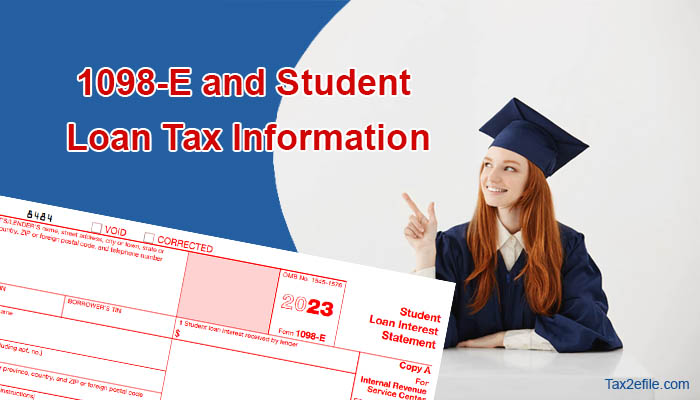
| Form 1098-E (Student Loan Interest Statement) | Student loan interest of $600 or more paid by a borrower. | Financial institutions and organizations. |
| Form 1098-T (Tuition Statement) | Payments received for qualified tuition and related expenses, scholarships, and prior-year adjustments. | Colleges, universities, and eligible educational institutions. |
| Form 1098-C (Contributions of Motor Vehicles, Boats, and Airplanes) | Donations of motor vehicles, boats, or airplanes valued over $500. | Charitable organizations. |
| Form 1098-F (Fines, Penalties, and Other Amounts) | Payments of $600 or more related to fines, penalties, and other amounts. | Government and certain nongovernment entities. |
| Form 1098-Q (Qualifying Longevity Annuity Contract – QLAC) | Purchase of QLACs, premium payments, and annuity terms during the year. | QLACs purchased through qualified retirement accounts such as IRAs and 401(k) plans. |
What’s New for 2025-26?
The tax code has changed as a result of recent laws like the One Big Beautiful Bill (OBBB). The core elements of the Form 1098 remain unchanged, but several changes that impact borrowers are:
- The State and Local Tax (SALT) deduction cap has been raised to $40,000, impacting those who file a 1098-MORT (hrblock).
- Interest on qualifying vehicle loans (Form 1098-VLI) now qualifies for a new deduction. Lenders have transition support for 2025 but pay attention to this for future reporting.
- Borrowers need to examine their 1098s closely to determine whether itemizing is still a preferable option, as the standard deduction has increased to $15,750 (for single) and $31,500 (for joint).
Critical Deadlines for Filing Form 1098
Significant IRS penalties may result for missing a deadline. 1098 filers, please note these deadline dates on your calendars:
- Copy B to Borrowers/Payers: February 02, 2026
- Paper Filing Deadline: March 02, 2026
- Electronic Filing Deadline: March 31, 2026
Penalties
- If you e-file fewer than 10 forms, you will receive a $340 penalty for each form.
- If the deadline is missed, the penalty starts from $60 per form to $4,098,500 per year, and the highest limit for small business penalties is $1,366,000 per year.
- For inaccurate or wrong information, the penalty is the same as failure to file the tax before the deadline.
Step-by-Step Instructions to File Form 1098
Following are the required steps to filing Form 1098 with the IRS.
- Gather the required information, including the lender’s legal name, address, Taxpayer Identification Number (TIN) of the lender and borrower, borrower’s name, address, total interest received, points paid, and outstanding principal amount.
- Choose an IRS-authorized e-file provider like Tax2efile to ensure secure transmission and compliance with IRS standards.
- Log in to your e-file provider and select the appropriate Form 1098 for the tax year. Tax2efile offers an intuitive dashboard to manage multiple forms effectively.
- Fill out the details manually or upload data using CSV or Excel files for high-volume filings. Tax2efile supports bulk uploads, saves time, and reduces manual errors.
- Before submission, review all entered data carefully. IRS-authorized platforms perform automatic validation checks for things like missing fields, invalid TINs, and formatting errors.
- Validate and submit the form electronically.
- Wait for IRS acknowledgement indicating accepted forms, accepted forms with errors, or rejected forms. Tax2efile tracks acceptance status in real time and takes corrective action if needed.
- Supply Copy B of the form to borrowers before the deadline. Download printable copies and recipient copies on Tax2efile. Retain filed copies in the event of an IRS audit.
E-filing IRS Form 1098 doesn’t have to be complex or time-consuming. With the right preparation and a trusted IRS-authorized platform like Tax2efile, you can file accurately, meet deadlines with confidence, and eliminate the stress of paper-based reporting. Start early, e-file smart, and stay compliant with Tax2efile.