- March 23, 2026
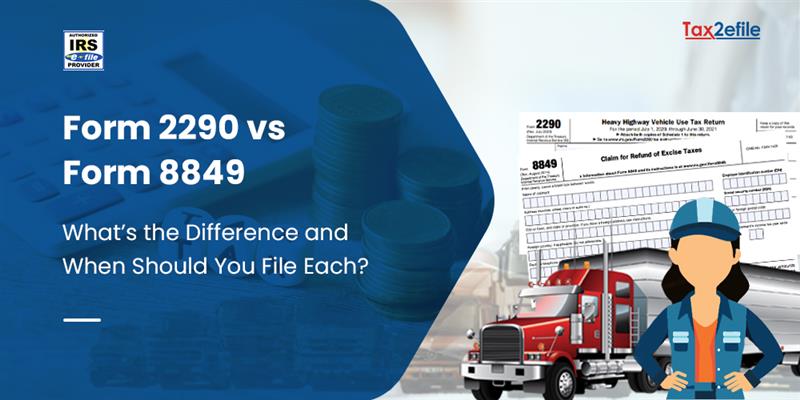
IRS Forms 2290 & 8849 can be confusing for heavy truck owners and fleet operators trying to stay compliant with the Heavy Vehicle Use Tax (HVUT). Both forms relate to heavy vehicle taxes and often work together in the HVUT process, but they serve different purposes. Form 2290 is a proactive tax mechanism used to report and pay HVUT, while Form 8849 is a recovery mechanism, a way to reclaim overpaid excise taxes already paid. Understanding the differences, deadlines, and filing requirements of these forms is important to avoid necessary tax payments, missed refund opportunities, and compliance issues. In this article, we’ll walk through the key differences between Form 2290 and Form 8849, when to use each form, and common scenarios where both forms may apply. Tax2efile simplifies the entire HVUT filing process, enabling you to easily receive your stamped Schedule 1 faster and handle refund claims efficiently by lowering the risks of IRS penalties.
Table of Contents
Form 2290: Overview of Heavy Highway Vehicle Use Tax Return
What is Form 2290?
Form 2290 is used to report and pay HVUT for all vehicles weighing over 55,000 pounds, operating on public highways.
Who Must File Form 2290?
If you are a heavy vehicle owner/operator, a business using heavy highway vehicles, or a trucking company, then you must file Form 2290 for each vehicle in service (gross weight of more than 55,000 pounds or more). Trucks driven fewer than 5,000 miles (or 7,500 miles for agricultural vehicles on highways) are excluded from paying taxes,s but their owners are still required to file Form 2290.
Why is Form 2290 Required?
Filing Form 2290 is important to stay compliant with IRS HVUT requirements, obtain stamped Schedule 1 (required for vehicle registration), avoid penalties and interest, and maintain legal highway operations.
Deadline
The HVUT tax year for Form 2290 runs from July 1, 2025, to June 30, 2026.
Example: If you first use your taxable vehicle registered in your name on a public highway in July 2025, you must report the new vehicle by August 31 2025.
Form 8849: Overview To Claim Refund of Excise Taxes
What is Form 8849?
Form 8849 is a form used for Claims for Refund of Excise Taxes issued by the IRS. This document is specifically designed for individuals, businesses, and organizations who want to claim reimbursement of excise taxes paid on certain goods or activities. This form enables motor carriers to submit Schedule 6 of Form 8849 and to request a refund or credit for many kinds of excise taxes paid on fuels on Form 2290.
Who Must File Form 8849?
Truckers or fleet operators can file Form 8849 Schedule 6 for an overpayment due to a mistake in tax liability, non-taxable use of fuel, a vehicle that is destroyed, stolen, or sold before June 1, or a vehicle used 5000 miles or less (7500 miles for agricultural vehicles). All cases may qualify for a refund, following a mileage verification, after the completion of the tax year.
Why is Form 8849 Required?
Form 8849 is required to recover overpaid taxes or claim refunds for HVUT payments. It is also necessary to request credits for off-highway fuel usage for the excise tax from Form 2290 filed by businesses, trucking and transportation companies, fuel blenders, and certain non-profit organizations.
Deadline
Generally, Form 8849 must be filed by the last day of the quarter that follows the quarter in which the tax liability appeared first. By default, the extension is not available for filing this form, and certain exceptions apply to certain excise taxes. The actual deadline may vary depending on the specific refund claim.
Claim Your Form 8849 Refund with Tax2efile Today!

Comparing Form 2290 and Form 8849
| Feature | Form 2290 | Form 8849 |
|---|---|---|
| Purpose | Pay HVUT taxes | Claim a refund of excise taxes |
| Filed By | Heavy vehicle owners/fleet operators | Taxpayers requesting a refund on excise taxes |
| When to Use | At the start of the HVUT tax period or after the initial use of a vehicle | Once the tax is paid, a refund becomes applicable |
| Primary Outcome | Pay tax and receive Schedule 1 | Receive a tax refund by filing Schedule 6 |
| Relating to HVUT | Mandatory for taxable vehicles | Refund eligibility is optional |
| Deadline | Filed annually | Filed as needed |
| Common Mistakes | Missing HVUT filing deadlines or entering incorrect mileage details | Not claiming a refund after selling a vehicle or choosing the wrong form |
Scenario
A trucking company starts to operate a new 65,000-lb truck in July, the company files Form 2290 by August 31st, and pays the taxes applicable on HVUT to receive a stamped Schedule 1. However, the same truck is sold in November before the tax year ends. The company can then file Form 8849 to claim prorated refunds for the unused months, and they can claim a refund if the tax was paid earlier, if the vehicle was used less than 5,000 miles in the tax year.
Get Started by Registering with Tax2efile Today!
Managing Form 2290 and Form 8849 efficiently is very important in HVUT compliance. Knowing when to file and pay heavy vehicle taxes helps you to avoid unnecessary costs and stay compliant with the IRS regulations. Using a reliable solution like Tax2efile, you can e-file, track, and manage Form 2290, receive your stamped Schedule 1 without delay, and claim refunds through Form 8849. Make sure to handle it with confidence.
FAQs
Can I use the same Form 2290 to file for two trucks?
Yes, you can use one form to report multiple trucks, but each vehicle must be listed separately on the form.
What are the Schedules in Form 8849?
Form 8849 has six different schedules that allow taxpayers to claim refunds for different kinds of excise taxes. The details of these schedules are:
- Schedule 1: Fuel-related refunds that are subject to tax-exempt purposes like off-highway business use, government use, and many more.
- Schedule 2: Sellers who sell fuel that is exempt from taxes and can therefore request a refund later.
- Schedule 3: Claiming a refund for the use of alternate fuels.
- Schedule 5: Section 4081 (e) claim for taxpayers applying for refunds in line with specific tax adjustments of the IRS code.
- Schedule 6: Most common schedule for claiming refunds based on vehicle condition, mileage, and overpayments.
What is stamped Schedule 1 of Form 2290, and why is it important?
A stamped Schedule 1 of Form 2290 is proof of HVUT payment that companies receive after filing Form 2290, which is required by the DMV (Department of Motor Vehicles) to register or renew your heavy vehicle registration.
Can Form 8849 be filed first before filing Form 2290?
No, you must file Form 2290 first and pay the HVUT before claiming Form 8849 for a refund.