
File IRS Form 1099-C Quickly and Securely
Reporting Canceled Debt Made Easy with Tax2efile

Simple Steps to E-File Form 1099-C
 Register with Tax2efile
- Provide Required Tax Information
- Submit Your Form to IRS
Why Choose Tax2efile?
- Quick, Secure, and Reliable Platform
- Easy Bulk Filing Feature & Premium Service
- Unified Platform for All Your Tax E-Filing Needs
E-file IRS 1099-C Form Online with Tax2efile
Need to report canceled or forgiven debt? File Form 1099-C online with Tax2efile. If you’re a bank, credit union, finance company, or other qualifying creditor reporting debt cancellations of $600 or more, Tax2efile helps you prepare your returns, enter the required debtor information, and submit your filings electronically to the IRS.

What is Form 1099-C?
Form 1099-C, known as Cancellation of Debt, is an IRS information form reported by creditors regarding canceled or forgiven debts worth at least $600.
For example, a customer owes $5,000 but reaches an agreement with the creditor to settle the debt for $3,000. The creditor forgives the remaining $2,000. Since the canceled amount exceeds the IRS reporting threshold of $600, the creditor generally must report the $2,000 on Form 1099-C if the applicable filing requirements are met.
This tax form contains the creditor’s identifying details, the debtor’s identifying information, amount of canceled debt, and cause of the cancellation event.
When is Form 1099-C Used?
Some common examples include credit card debts settlement, mortgage debts cancellation, qualified loans forgiveness by either individual taxpayers or corporations, qualified student loan discharges, qualified bankruptcies discharge, and debt canceled due to foreclosure or any other qualified proceedings.
Are all canceled debts required to be reported using Form 1099-C?
No. Only under certain circumstances will the reporting be necessary based on the creditor, amount of debt canceled, type of debt, and nature of qualified event.
Does receiving Form 1099-C mean the debt is taxable?
It does not always work this way. Debt cancellation is considered taxable income. However, some exceptions exist. An individual may qualify for an exclusion due to bankruptcy or insolvency. There is a distinction between creditors’ reporting requirements and individuals’ personal income tax.
What Information is Required for File Form 1099-C?
Before filing Form 1099-C, gather the creditor details, debtor information, and records showing the canceled debt.
Creditor Information
You’ll need the creditor’s legal name, address, TIN, and contact phone number.
Debtor Information
Keep the debtor’s name, address, and TIN ready. You’ll also need an account number when required, such as when reporting multiple accounts for the same debtor.
Canceled Debt Details
Depending on the transaction, you’ll need the date of the identifiable event, amount discharged, interest included in the canceled amount (if any), description of the debt, identifiable event code, whether the debtor was personally liable, and fair market value of secured property when applicable.
Having these details ready before you start can help you complete the return without repeatedly checking your records.
Form 1099-C Boxes Explained
- Box 1 Date of Identifiable Event: Enter the date of the event that triggered the reporting requirement. For example, if a creditor agrees to cancel part of a debt through a settlement, the date of the qualifying event generally goes here.
- Box 2 Amount of Debt Discharged: Report the amount of debt canceled or forgiven. For example, if a borrower owes $8,000 and the creditor accepts $5,000 as full settlement, the remaining $3,000 may be reported. Stated principal and other components of indebtedness are treated according to IRS rules.
- Box 3 Interest if Included in Box 2: If Box 2 includes interest, enter the interest portion separately here. If Box 2 does not include interest, leave Box 3 blank.

- Box 4 Debt Description: Describe the type or origin of the canceled debt, such as a mortgage, credit card account, or student loan. If Form 1099-C is also satisfying Form 1099-A reporting, include the secured property description.
- Box 5 Personal Liability: Check this box when the debtor was personally liable for repaying the debt when created or, for a modified debt, when last modified.
- Box 6 Identifiable Event Code: Enter the code that best describes why the cancellation became reportable. For example, Code F generally applies to an agreement to cancel debt for less than the amount owed.
- Box 7 Fair Market Value of Property: Enter fair market value when Form 1099-C is used to satisfy applicable Form 1099-A reporting in connection with foreclosure, abandonment, or a similar property event. This is not required for every canceled debt.

Watch our step-by-step video on How to E-File IRS Form 1099-C with Tax2efile
Who is Required to File Form 1099-C?
The lender files a 1099-C with IRS and the IRS sends the filer a copy of the Form 1099-C. You may file Form 1099-C if the user is:
- A financial institution (such as a domestic bank, trust company, building and loan association, or savings and loan association).
- A credit union.
- A corporation that is a subsidiary of a financial institution or credit union.
- A federal government agency.
- Any organization whose significant trade or business is the lending of money.
To obtain more information on the Form 1099-C, click here
The filer may be able to exclude the cancellation of debt income if one of the below conditions applies:
- The debt was discharged in bankruptcy.
- The debt was qualified as main home/farm indebtedness (applies through 2025).
- The filer was insolvent.
- The debt was qualified real property business indebtedness.
When is the Form 1099-C Deadline?
| Filing Type | Deadline |
|---|---|
| Recipient copy | January 31st |
| IRS Paper Filing | February 28th |
| IRS Electronic Filing | March 31st |
Note: If the due date/deadline falls on a Saturday, Sunday, or federal holiday, the filer will need to E-file on the next business day.
Get Started by Registering with Tax2efile Today!
Our IRS-approved e-fling services make tax season stress-free. Sign up Today!

Frequently Asked Questions
Find answers to commonly asked questions about our products and services.
Form 1099-C is used for cancellations of debts for which the debtor actually incurred the underlying debt.
If you are a financial institution, such as a domestic bank, a trust company, a credit union, executive agency, a military department subsidiary relationship.
Details of Creditor Information & Tin of Creditor, Debtor Information, Tin as well as the amounts that have been cumulated.
Yes, Tax2efile offers a bulk upload feature that allows the user to upload all of the payers to an excel sheet for a faster process.
Tax2efile allows you to correct a mistake to the recipient’s information for TINs, Names & amounts.
Generally, student loan forgiveness is not reported on Form 1099-C. However, certain circumstances may trigger taxable income, and it’s advisable to consult with a tax advisor to determine if filing Form 1099-C is necessary.
Generally, if an individual forgives a personal loan, it may not trigger a Form 1099-C. However, it’s important to understand the tax implications, and consulting with a tax professional is recommended.
Failure to file Form 1099-C when required may result in penalties. It’s essential to adhere to the IRS deadlines and fulfil reporting obligations to avoid any financial consequences.
Yes, Tax2efile offers printing and mailing service! Our dedicated team will print and mail out each form you filed.
Using our fast electronic service, you can complete your filing within 5 minutes.
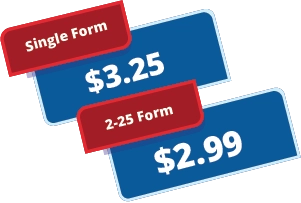
To file Form 1099-C for a single return the filing fee is $3.25.
The IRS requires Form 1099-C to be submitted by February 28 through the mail and by March 31 if you file the form electronically however, recipients’ copy should be mailed by January 31.
Yes, if you had credit card debt cancelled, it may trigger the need to file Form 1099-C. Report accurate details related to the cancellation of credit card debt to comply with IRS regulations.
Medical debt forgiveness may trigger the need to file Form 1099-C. Report accurate details regarding the cancelled medical debt on the form for proper IRS compliance.
Still have questions?
If you have more questions, please refer to our FAQ page. Contact our customer support team for assistance.


